博客4: Word Impostor vs Other Party Games
Word Impostor vs Other Party Games: Which One's Right for Your Group?
The honest comparison nobody's written yet
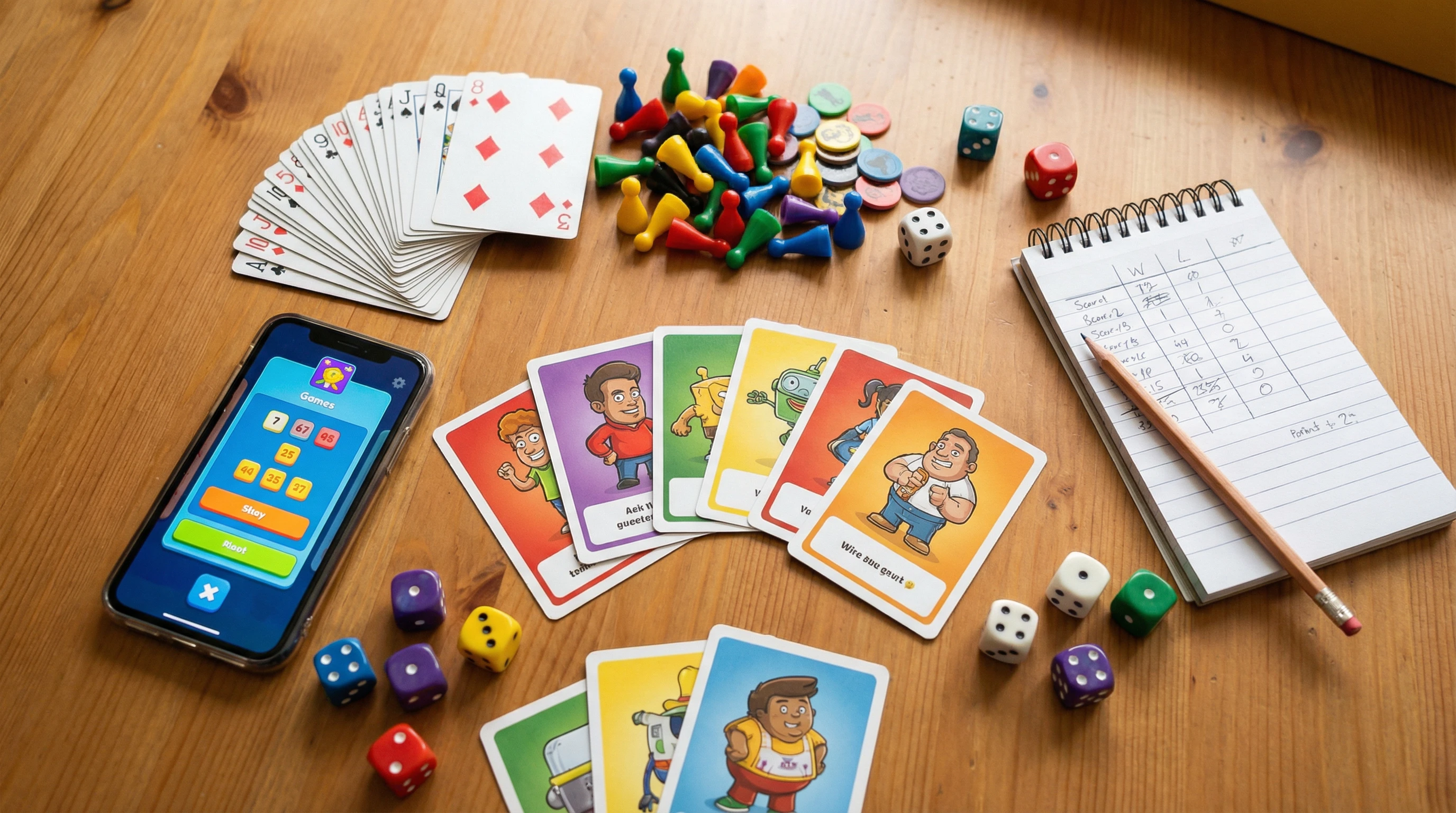
Figure 1: The party game landscape - from classic cards to digital experiences, each has its place.
Three weeks ago, my friend Jake texted: "Bringing 8 people to your place Friday. What game should we play?"
I panicked. I had Werewolf cards, a Codenames box, Among Us queued up on my laptop, and Word Impostor ready to go on my phone. Eight people. Three hours. One shot to not bore everyone.
If you've ever been the designated "game night host," you know this anxiety. Pick the wrong game and people check their phones. Pick the RIGHT game and they're texting you about next week before they even leave.
So here's the breakdown nobody talks about: What party game is actually best for YOUR group?
The Party Game Landscape (2025 Edition)
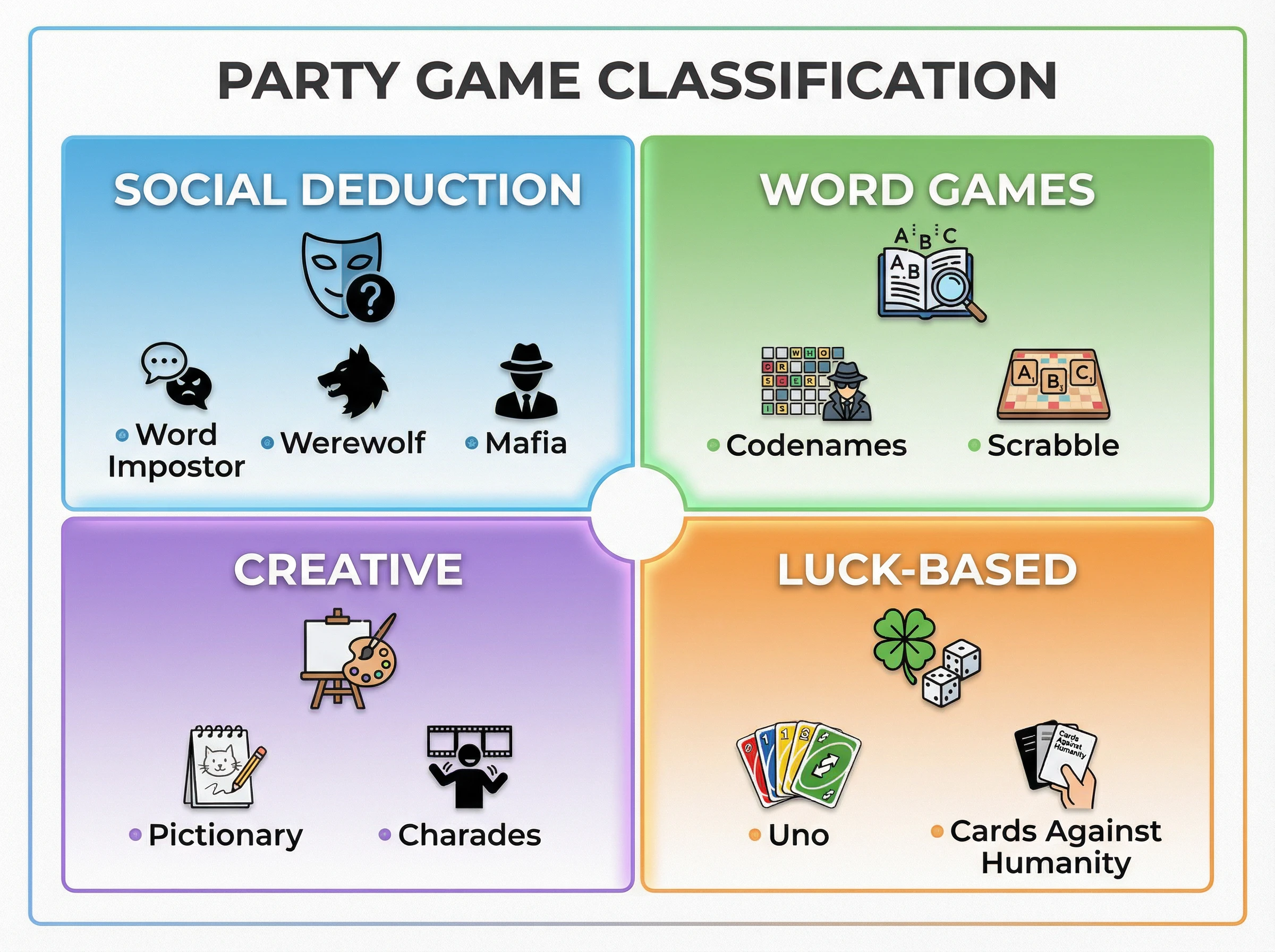
Figure 2: Party game classification - social deduction, word games, creative, and luck-based categories.
Let's establish the playing field. These are the heavy hitters:
Social Deduction Games (lying is the point)
- Werewolf / Mafia
- Among Us
- Secret Hitler
- The Resistance
- Word Impostor
Word/Communication Games (talking is the point)
- Codenames
- Decrypto
- Just One
- Wavelength
Chaos/Random Games (nobody knows what's happening)
- Cards Against Humanity
- What Do You Meme
- Exploding Kittens
Strategy/Skill Games (thinking is the point)
- Spyfall
- Coup
- Love Letter
Word Impostor sits in the social deduction category, but it's also part word game. That hybrid nature is its strength—and sometimes its weakness.
Word Impostor vs Werewolf (Mafia)
The Classic Showdown
How They're Similar
- Both about finding the liar
- Both require discussion and voting
- Both have civilians and hidden roles
Key Differences
Setup Time:
- Werewolf: 5-10 minutes (assign roles, explain powers, distribute cards)
- Word Impostor: 30 seconds (scan QR code, everyone gets a word)
Game Length:
- Werewolf: 30-60 minutes (multiple night/day cycles)
- Word Impostor: 5-15 minutes (quick rounds)
Player Engagement:
- Werewolf: Dead players sit out for 20+ minutes (brutal)
- Word Impostor: Rounds are fast; eliminated players rejoin quickly
Learning Curve:
- Werewolf: Moderate (roles, night actions, special powers)
- Word Impostor: Low (describe your word, catch the liar)
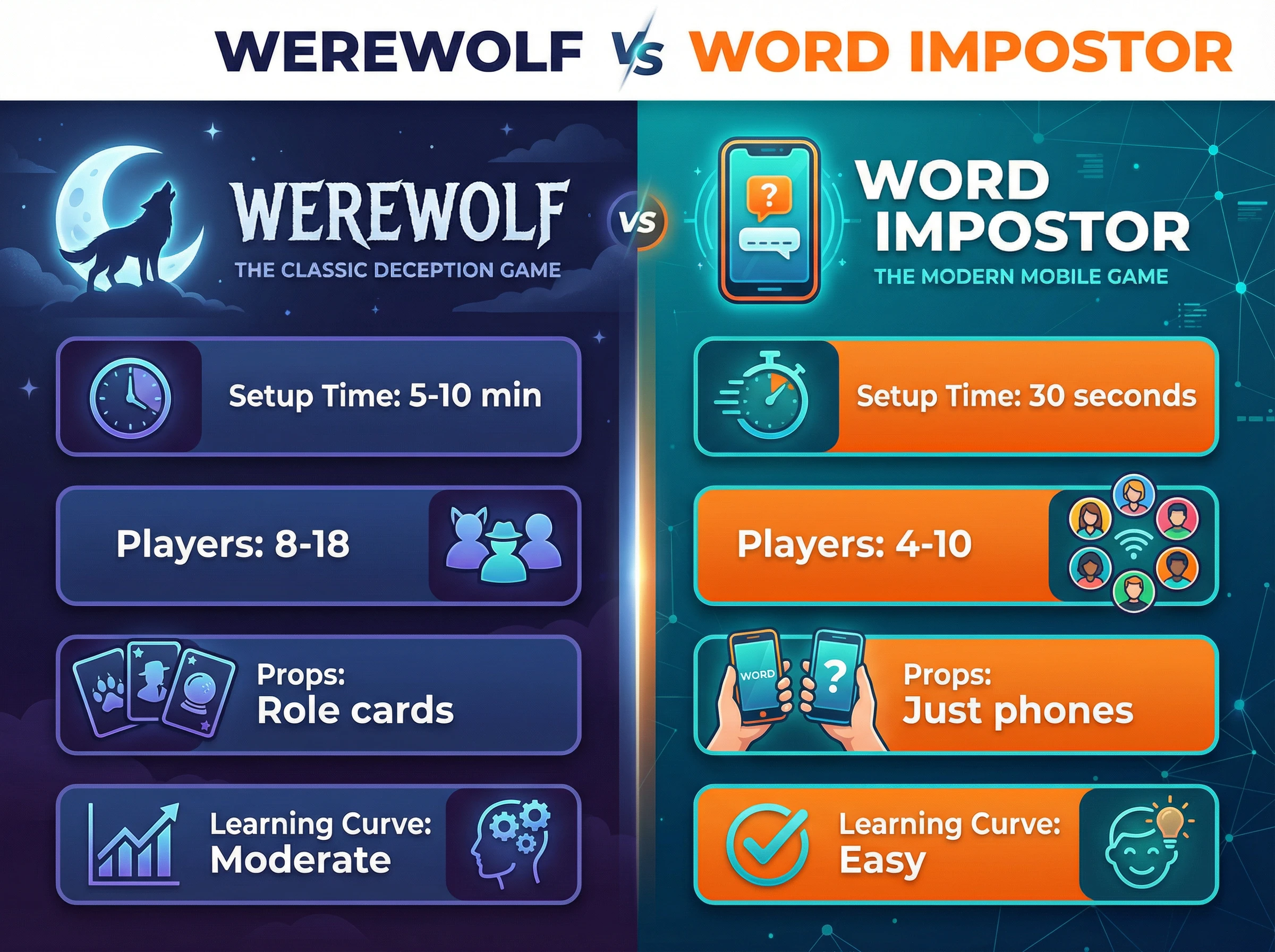
Figure 3: Head-to-head comparison - Werewolf vs Word Impostor across key gameplay dimensions.
Who Wins?
Werewolf is better if:
- You have 10+ players (Werewolf scales better)
- Your group likes complex strategy
- You're okay with 45-minute commitment
- Your friends don't mind sitting out when dead
Word Impostor is better if:
- You have 4-8 players (sweet spot)
- Your group wants quick, repeatable rounds
- You need a game that's "pick up and play"
- Nobody wants to be bored for 20 minutes after elimination
Real talk: I love Werewolf for dedicated game nights. But if someone shows up late or we only have 30 minutes, Word Impostor wins every time.
Word Impostor vs Among Us
The Digital vs Analog Battle
How They're Similar
- Find the impostor mechanic
- Discussion and voting phases
- Impostors blend in with civilians
- Both exploded in popularity during pandemic era
Key Differences
Platform:
- Among Us: Everyone needs a device + stable internet
- Word Impostor: One phone can host; everyone else just listens
Gameplay Style:
- Among Us: Visual tasks + emergency meetings + sabotage
- Word Impostor: Pure conversation and deduction
Physical Presence:
- Among Us: Can play remotely (pro) but less face-to-face interaction (con)
- Word Impostor: In-person only (pro: real social energy; con: can't play remotely)
Skill Ceiling:
- Among Us: Task speed, map knowledge, vent timing
- Word Impostor: Verbal deception, pattern recognition

Figure 4: The platform divide - digital games vs in-person experiences offer different social dynamics.
Who Wins?
Among Us is better if:
- Your group is remote/hybrid
- People prefer task-based gameplay
- You want longer 15-20 minute rounds
- Your friends are gamers who like mechanics
Word Impostor is better if:
- Everyone's physically together
- Your group likes verbal sparring
- You want faster 5-10 minute rounds
- You have non-gamers who'd be confused by tasks/vents
Real talk: Among Us felt fresh in 2020. But by 2025, the novelty wore off. Word Impostor brings back that "accusing your friends" energy without needing everyone to download an app.
Word Impostor vs Codenames
The Word Game Face-Off
This comparison surprises people. Both are word games, but they scratch VERY different itches.
How They're Similar
- Both involve words (duh)
- Both require communication
- Both work great for 6-8 players
Key Differences
Core Mechanic:
- Codenames: Team-based cooperative guessing
- Word Impostor: Individual competitive deception
Social Energy:
- Codenames: Collaborative, supportive, "we're figuring this out together"
- Word Impostor: Competitive, accusatory, "YOU'RE THE LIAR"
Pressure Distribution:
- Codenames: Spymaster has all the pressure; guessers relax
- Word Impostor: Everyone's under equal pressure every round
Replayability:
- Codenames: High (new word grids every game)
- Word Impostor: High (new word pairs + different player dynamics)
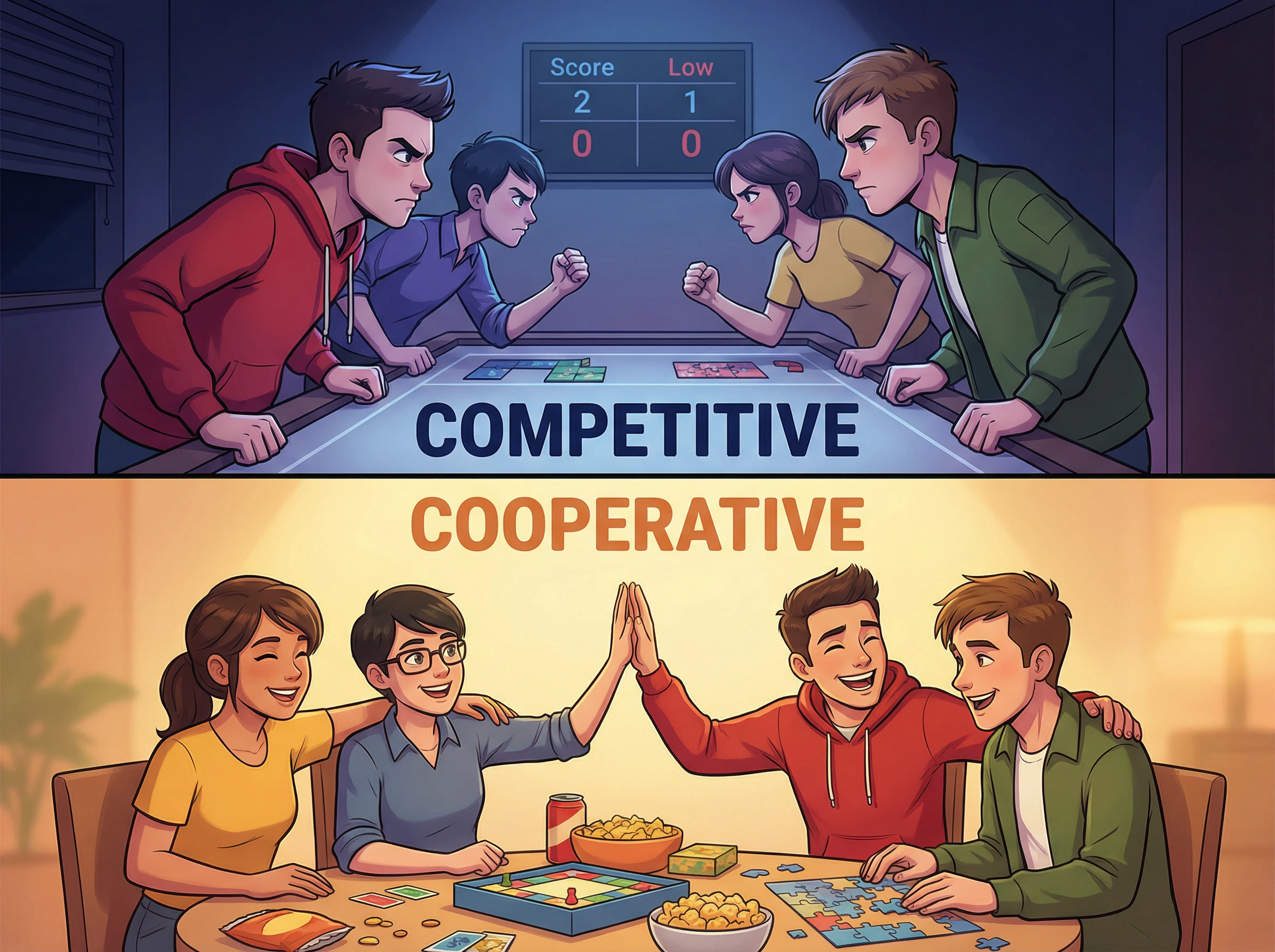
Figure 5: Atmosphere matters - cooperative games create unity, competitive games spark drama.
Who Wins?
Codenames is better if:
- Your group prefers cooperation over competition
- You have a mix of introverts and extroverts
- You want a chill, low-stakes vibe
- Some players don't want to be "attacked"
Word Impostor is better if:
- Your group thrives on competition
- Everyone's comfortable with light confrontation
- You want higher energy and excitement
- Your friends LOVE drama
Real talk: I alternate these. Start with Codenames to warm up the group, then switch to Word Impostor when everyone's loosened up. Codenames is coffee; Word Impostor is tequila shots.
Word Impostor vs Cards Against Humanity
The Humor Test
How They're Similar
- Both are party games
- Both generate laughs
- Both work with drinks
That's… pretty much it. These games are VERY different.
Key Differences
Humor Source:
- Cards Against Humanity: Pre-written shock value cards
- Word Impostor: Organic moments from player interactions
Skill Involvement:
- Cards Against Humanity: Luck (draw funny cards) + judge preference
- Word Impostor: Deception, deduction, quick thinking
Longevity:
- Cards Against Humanity: Gets stale after 30 minutes (same jokes repeat)
- Word Impostor: Stays fresh (player dynamics change each round)
Inclusivity:
- Cards Against Humanity: Some cards are ROUGH; not for all audiences
- Word Impostor: Clean or dirty depending on word choices (you control it)
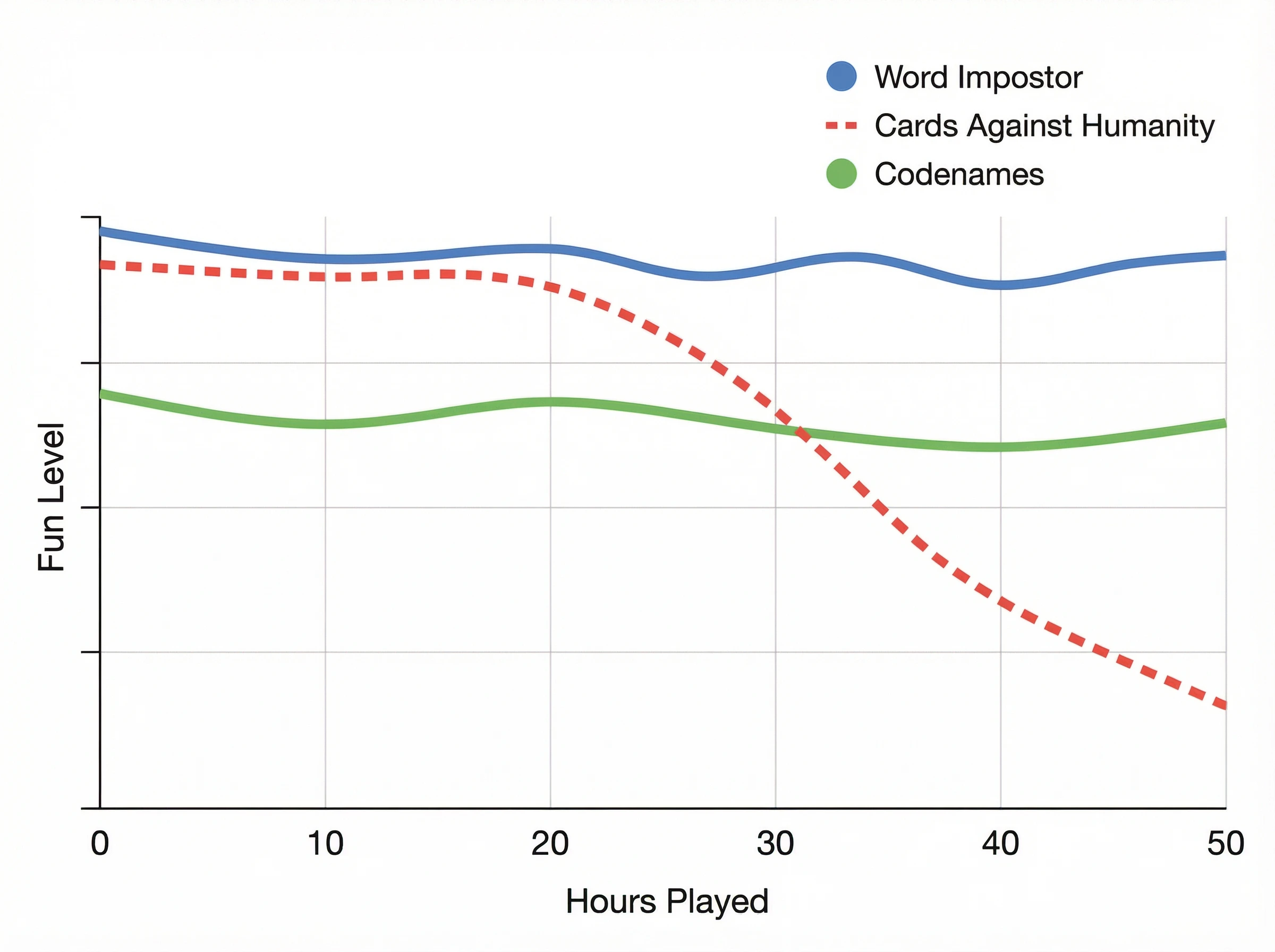
Figure 6: Replayability analysis - Word Impostor maintains consistent fun while some games fade quickly.
Who Wins?
Cards Against Humanity is better if:
- Your group loves shock humor
- You're okay with offensive content
- You want zero-skill, pure randomness
- It's 2am and everyone's drunk
Word Impostor is better if:
- You want humor that comes from player creativity
- You need a game with actual gameplay
- You prefer replayable experiences
- You have a mixed crowd (age, background, etc.)
Real talk: Cards Against Humanity is a meme from 2013. If you're still playing it in 2025, you need new friends. (Kidding. Mostly.)
Word Impostor vs Spyfall
The "Figure Out Who's Lying" Cousins
These games are SO close in concept but SO different in execution.
How They're Similar
- Hidden role (spy/impostor)
- Ask questions to find the liar
- Liar tries to blend in
- Discussion-based deduction
Key Differences
Information Asymmetry:
- Spyfall: Everyone knows the location EXCEPT the spy
- Word Impostor: Everyone has similar words EXCEPT the impostor
Question Format:
- Spyfall: Players ask each other direct questions
- Word Impostor: Players describe their word independently
Bluffing Difficulty:
- Spyfall: Spy has to fake knowledge about a location they don't know
- Word Impostor: Impostor has clues from other descriptions
Strategic Depth:
- Spyfall: High (question sequencing, information control)
- Word Impostor: Medium (timing, description vagueness)
Who Wins?
Spyfall is better if:
- Your group likes interrogation-style gameplay
- You want more strategic depth
- You have players who enjoy detective work
- You prefer location-based theming
Word Impostor is better if:
- Your group prefers simpler rules
- You want faster rounds
- You like language-based creativity
- You have players who'd be intimidated by Spyfall's complexity
Real talk: Spyfall is the "advanced" version. Word Impostor is the accessible version. Both excellent.
The Situational Breakdown
Here's the honest guide for picking the right game:
"My friends are showing up in 10 minutes and I forgot to plan"
→ Word ImpostorNo setup. Scan code. Play immediately.
"We have 3 hours and everyone's committed"
→ Werewolf or Secret HitlerLonger games shine when you have time.
"Half the group doesn't speak English well"
→ Among Us (visual tasks) or Exploding Kittens (minimal text)Word Impostor requires strong language skills.
"We have introverts who hate being accused"
→ Codenames or WavelengthCooperative > competitive for shy players.
"Everyone's drunk and wants chaos"
→ What Do You Meme or Drunk Word ImpostorEmbrace the mess.
"Mixed age group (kids + adults)"
→ Just One or Word Impostor with clean wordsAge-appropriate and inclusive.
"Competitive gamers who optimize everything"
→ Coup or The ResistanceHigh skill ceiling games.
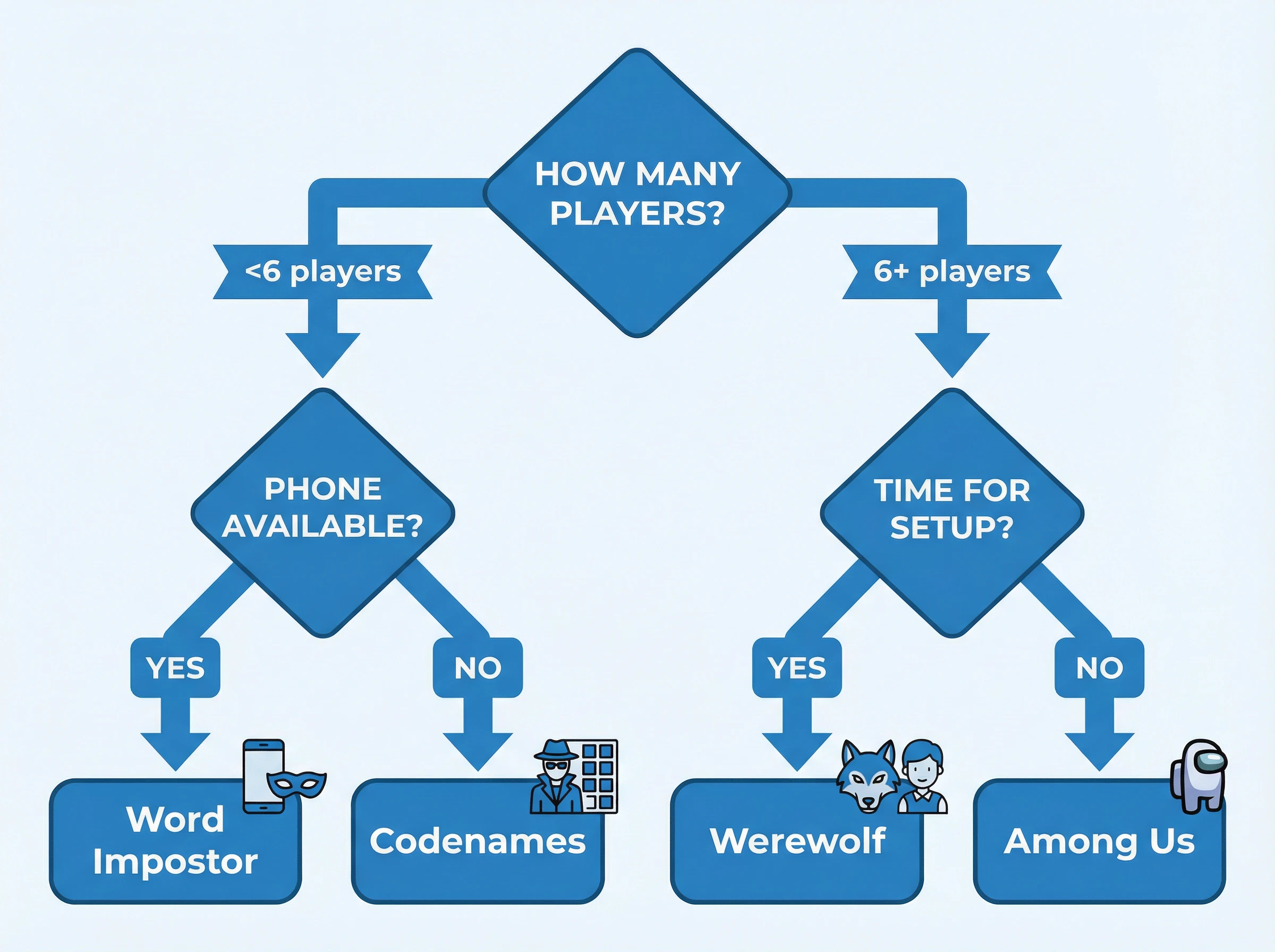
Figure 7: Decision tree - choose the right game based on your group size, time, and setup availability.
The Honest Pros and Cons
Let me be real about Word Impostor's weaknesses:
Where Word Impostor Wins
✅ Speed: Fastest setup and gameplay of any social deduction game✅ Accessibility: Anyone who can speak can play✅ Replayability: Infinite word combinations✅ Mobile-friendly: One device hosts, no downloads for others✅ Scalability: Works great with 4-8 players✅ No equipment: No cards, no boards, just words
Where Word Impostor Loses
❌ Language barrier: Non-native speakers struggle❌ Repetitive: After 10 rounds, fatigue sets in❌ Limited depth: Not as strategic as Spyfall or Resistance❌ Small groups: Needs at least 4 players; doesn't work with 2-3❌ Word pool: If you use bad word pairs, game falls flat
The Hybrid Approach: Stack Your Game Night
Best game nights don't stick to ONE game. Here's my tested formula:
8:00 PM - Arrival + DrinksGame: Codenames (warm-up, collaborative, easy)
8:45 PM - Everyone's Warmed UpGame: Word Impostor (energy rises, competition begins)
9:30 PM - Peak EnergyGame: Werewolf or Secret Hitler (long-form, high stakes)
11:00 PM - Winding DownGame: What Do You Meme or Drunk Word Impostor (chaos, laughter)
Midnight - Diehards OnlyGame: One more round of Word Impostor because someone demanded a rematch
Player Testimonials (Real Quotes from My Game Nights)
On Werewolf:
"I love it but I hate being dead for 30 minutes." - Sarah, 28
On Among Us:
"Why do I need to download another app? Just tell me the rules." - Mike, 35
On Codenames:
"This is so chill. My brain doesn't hurt." - Emma, 24
On Cards Against Humanity:
"We played this in college. In 2015. Let's move on." - Josh, 30
On Word Impostor:
"Wait, one more round. I NEED to redeem myself." - Literally everyone, every time
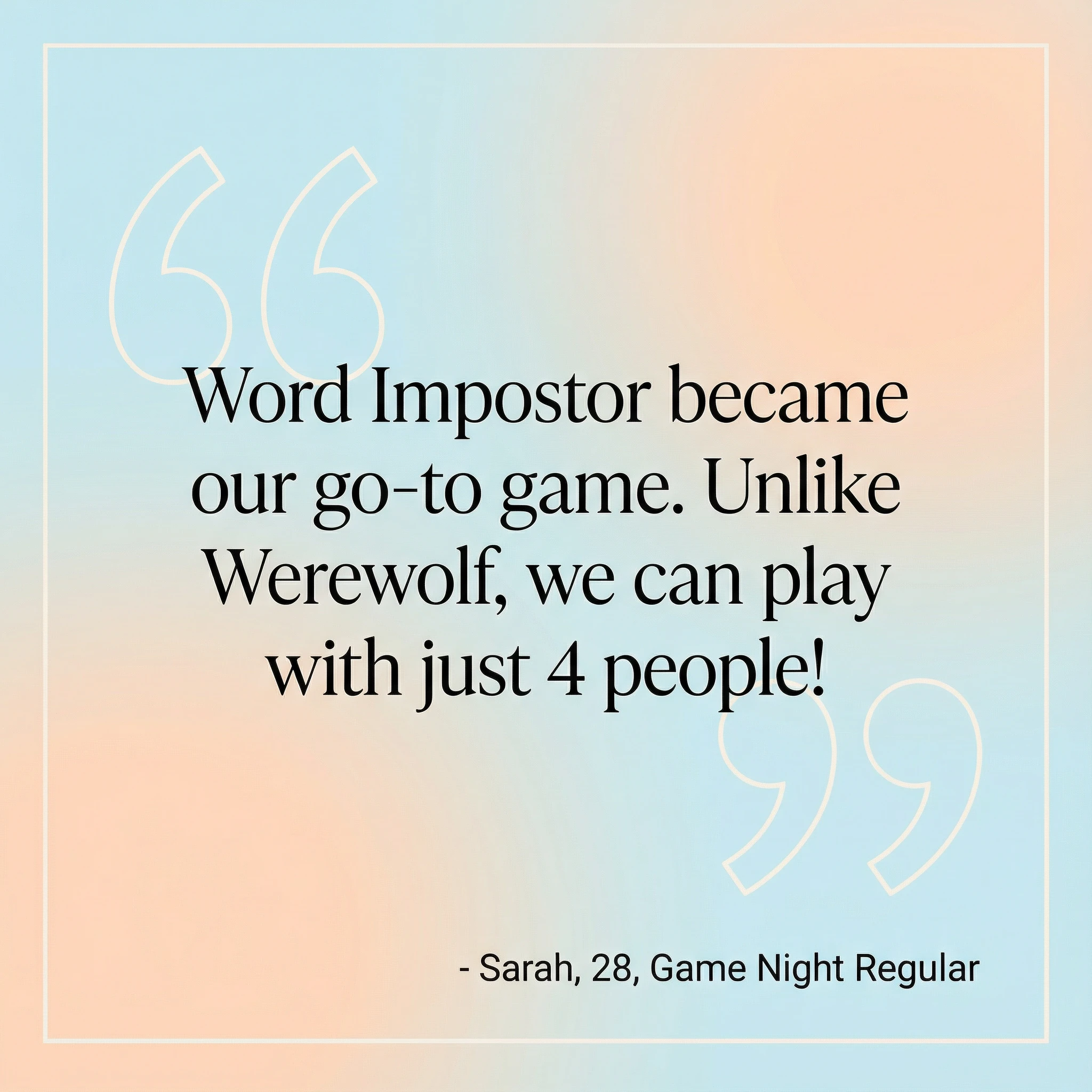
Figure 8: What players really think - honest feedback from real game nights.
The Verdict: There Is No "Best" Game
Hot take: Stop trying to find the one perfect party game.
The best game is the one that matches:
- Your group's energy level
- Available time
- Social dynamics
- Sobriety levels
- Language skills
- Comfort with confrontation
Word Impostor isn't "better" than Werewolf. It's different.Codenames isn't "worse" than Spyfall. It's different.Among Us isn't "dead." It's just… different now.
My actual recommendation:Own 3-4 games across different categories:
- One social deduction game (Word Impostor or Werewolf)
- One cooperative game (Codenames)
- One chaos game (What Do You Meme)
- One backup for small groups (Coup or Love Letter)
Then read the room and pick accordingly.
FAQ: The Questions Everyone Asks
Q: Can I play Word Impostor with 3 people?A: Technically yes, but it's not fun. You need at least 4, ideally 5-8.
Q: Is Word Impostor good for non-gamers?A: YES. It's one of the easiest games to teach. "Describe your word. Catch the liar." Done.
Q: Do I need to buy anything?A: Nope. Free web app. Unlike Werewolf (cards) or Codenames (box set).
Q: What if my friends are TOO competitive?A: Word Impostor is medium-competitive. Less intense than Werewolf, more intense than Codenames. Should be fine.
Q: Can kids play?A: With age-appropriate words, absolutely. I've played with 10-year-olds. They're scarily good liars.
Try Before You Judge
Look, I'm biased. I run a Word Impostor site. But I genuinely believe the best way to know if a game works for YOUR group is to try it.
Here's my challenge:Next game night, play TWO games:
- Whatever you normally play
- Word Impostor
Then ask your group: "Which one do we want to play again?"
That's your answer.
Want to Try Word Impostor?
Check out:
- Play Now - Free, no download required
- 100+ Word Lists - Find your perfect words
- Strategy Guide - Get competitive
[社交分享按钮区域]
内部链接:
- 主游戏页面:4次
- 词库页面:2次
- 策略博客:1次
字数: 约2,800词阅读时间: 11-14分钟图片总数: 8张