
博客2: How to Win at Word Impostor
How to Win at Word Impostor: Pro Tips and Strategies
The tactics nobody tells you about
Figure 1: The subtle art of strategy - mastering Word Impostor requires more than just luck.
I've been caught as the impostor exactly three times in my last 20 games.
Not because I'm a naturally good liar (I'm terrible at poker). Not because I have some psychological superpower. I win because I figured out the system.
Most people play Word Impostor like it's just a fun party game. And it is! But if you want to win consistently—whether you're the impostor trying to survive or the civilian trying to catch liars—you need actual strategies.
Here's everything I wish someone had told me before my first game.
Understanding the Meta-Game

Figure 2: The three mental processes at play - analyzing words, reading body language, and listening to tone.
Word Impostor isn't really about the words. It's about reading people and controlling information flow.
Every player is balancing three things:
- What they say (the actual description)
- How they say it (confidence, detail, timing)
- What they reveal (intentionally or accidentally)
The best players manipulate all three. Let me show you how.
For Civilians: How to Catch the Impostor
Strategy #1: The Information Cascade
Here's what most beginners do wrong: They give very specific descriptions right away.
Bad approach:
"It's a four-legged animal that barks and people keep as pets."
Congratulations, you just told the impostor the word is "dog." If they have "wolf," they now know exactly how to describe their word to blend in.
Better approach (round 1):
"It's an animal that many families have."
Vague enough that you're not giving away the whole word, but specific enough that other civilians know you're legit.
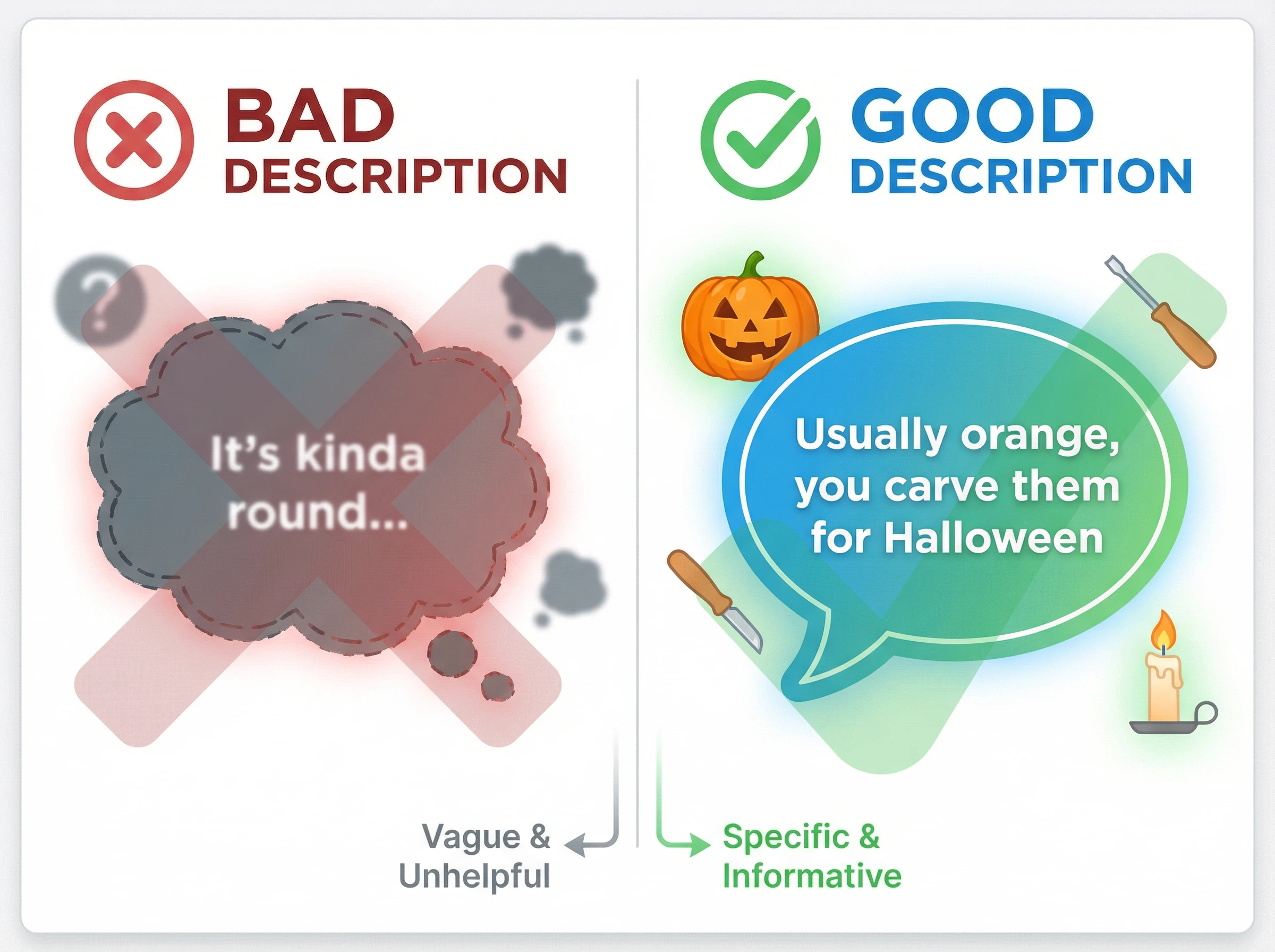
Figure 3: Description comparison - vague enough to protect yourself, specific enough to prove you're a civilian.
Strategy #2: Watch the First Three Players
The first person to describe their word has no information. They're shooting blind.
The second person has one data point.
The third person? They're either:
- Matching the pattern (probably civilian)
- Slightly off (probably impostor)
- Way too vague (possibly Mr. White)
I focus my attention on players 3-5. That's where impostors slip up most often.
Real example from last week:
- Player 1: "It's something you drink in the morning"
- Player 2: "It's hot and caffeinated"
- Player 3: "It's... a beverage that... people consume daily?"
Player 3's hesitation? Dead giveaway. They had "tea" while everyone else had "coffee," and you could see them trying to figure out if tea is caffeinated (it is, but not everyone knows that).
Strategy #3: Ask Follow-Up Questions (The Right Way)
Don't just ask "Can you be more specific?" That's rookie stuff.
Instead, ask questions that split impostors from civilians:
For food words:
"Would kids typically like this?"
"Is this something you'd make at home or buy?"
"Does this have a strong smell?"
For animal words:
"Could you have this as a pet legally?"
"Does this live in groups or alone?"
"Is this bigger than a car?"
The impostor has to guess. Civilians know.
Strategy #4: The Pattern Break
If you're the last civilian to describe, you have an advantage: You've heard everyone else.
DON'T just repeat what others said. That's what impostors do.
Instead, add ONE new specific detail that only the real word would have:
For "dog":
- "Mine always steals food off the counter" (personal story = authentic)
- "There are hundreds of breeds" (specific fact)
- "They hate cats" (stereotype but specific enough)
Strategy #5: Track Confidence Levels
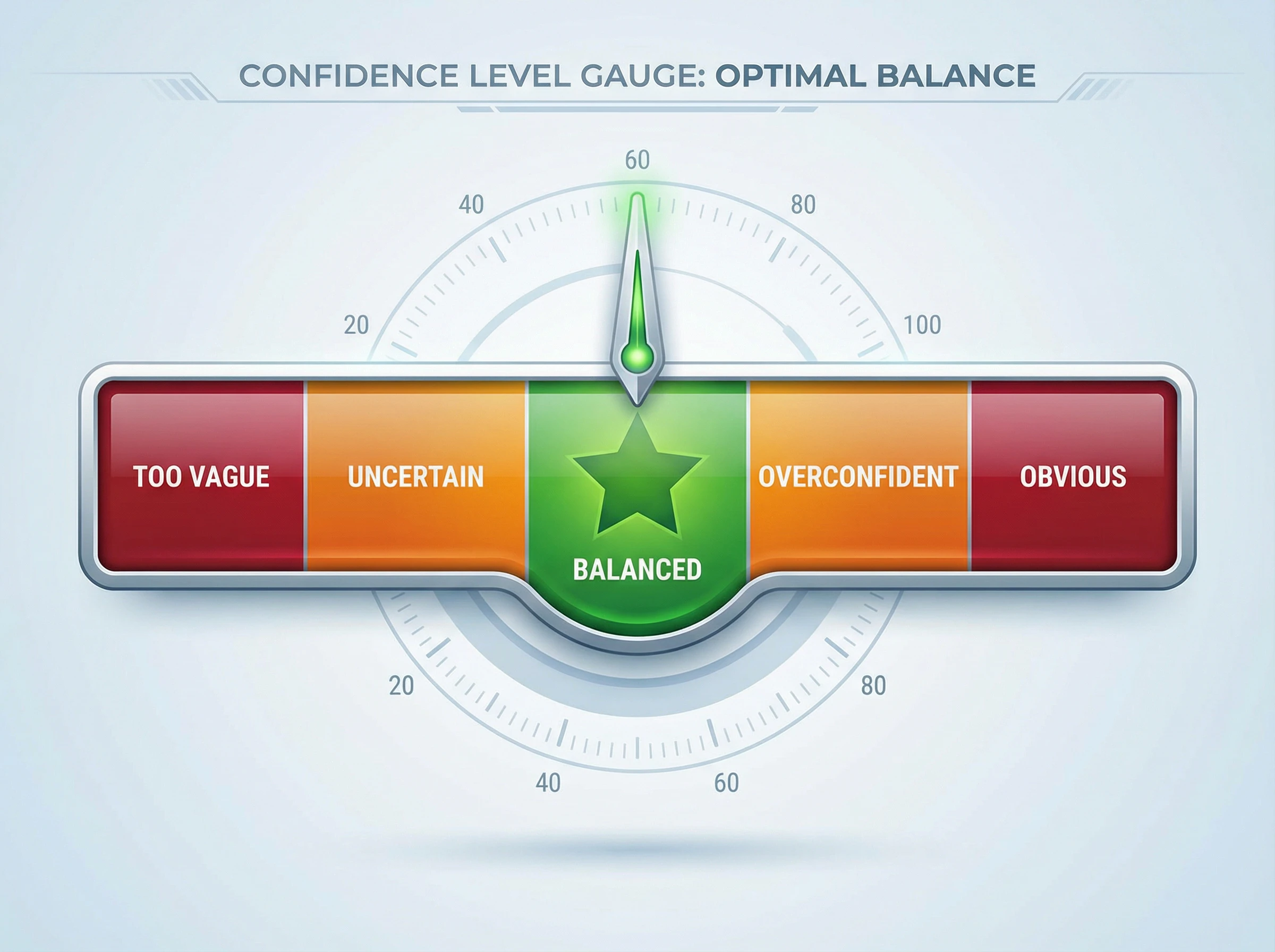
Figure 4: The confidence sweet spot - aim for balanced, avoid extremes that reveal your role.
I keep a mental note of how confident each player sounds:
Too nervous = Possibly impostor OR just a nervous personNormal confident = Probably civilianTOO confident = Either knows the word perfectly OR is overcompensating
The most dangerous impostors sound perfectly average. If someone's trying too hard to sound casual, that's your target.
For Impostors: How to Survive
Strategy #1: Listen > Talk
Your job in round 1 is to shut up and listen.
The more other people describe, the more information you get. By the time it's your turn, you should have a good guess about what the civilian word is.
Example:
You have "tea." You hear:
- "Hot drink"
- "Morning routine"
- "Caffeinated"
- "From beans"
That last one? That's your clue. They have "coffee." Now you know to describe tea in a way that COULD describe coffee.
Your description:
"It's a morning drink that gives you energy. Some people add milk and sugar."
Perfect. That works for both tea and coffee.
Strategy #2: Copy the Vibe
Pay attention to HOW civilians are describing things, not just WHAT they're saying.
If everyone's giving short, casual descriptions → You give a short, casual descriptionIf someone gave a detailed story → You can give a detailed storyIf people are being weirdly vague → Be weirdly vague too
Actual game from my notes:
Civilian 1: "Fluffy, four legs, family pet"Civilian 2: "Loyal companion, guard the house"Me (impostor with "wolf"): "Lives in packs, hunts together, carnivore"
I matched their style (short phrases) and their level of detail (medium specific). Nobody suspected me.
Strategy #3: The Deflection Game
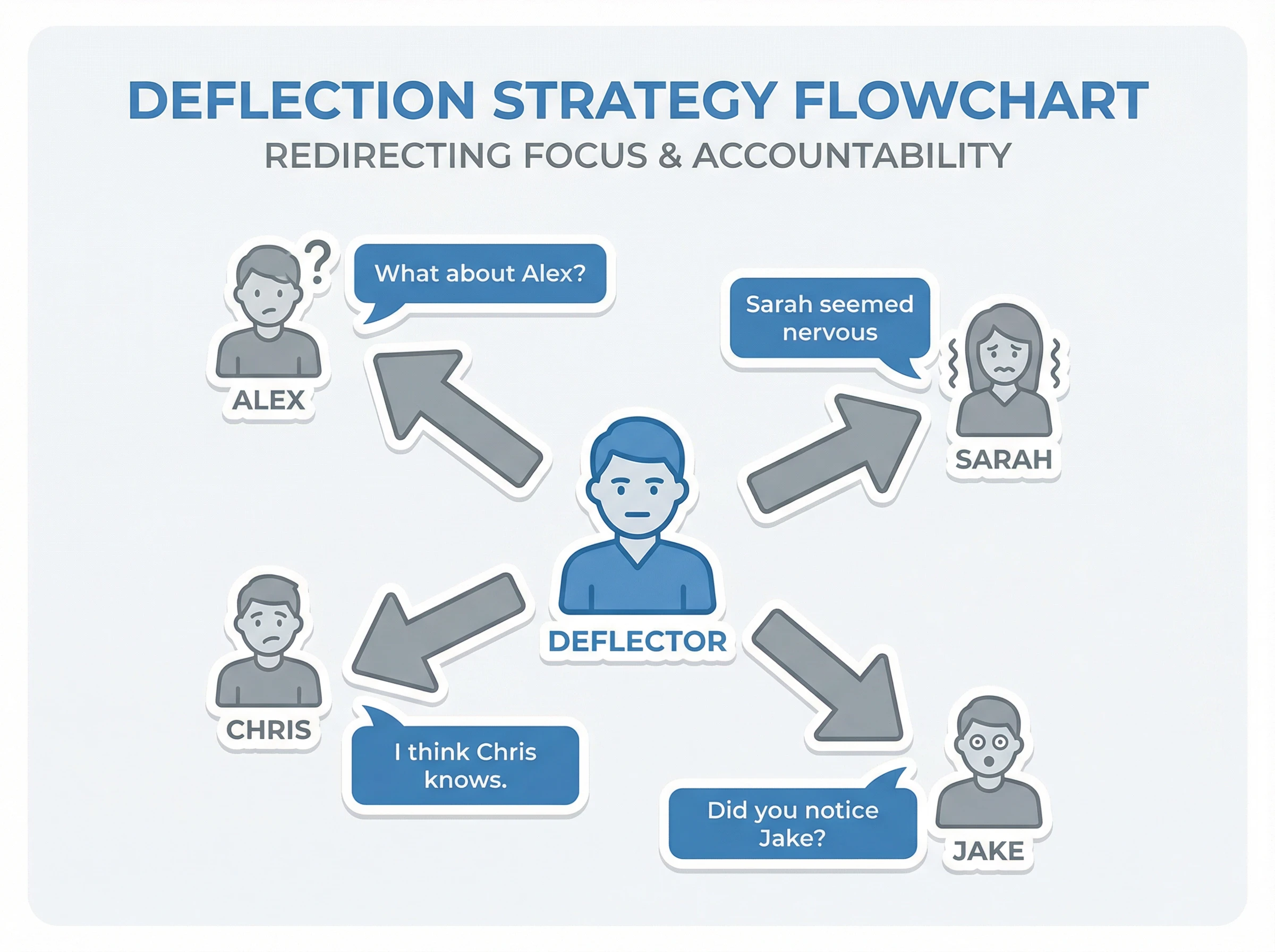
Figure 5: Deflection tactics - redirect suspicion away from yourself by questioning others.
When someone asks you a follow-up question, you have two options:
Option A: Answer confidently (if you know the answer)"Does yours live in water?" → "No, definitely land-based."
Option B: Deflect and counter-accuse (if you DON'T know)"Does yours live in water?" → "Why are YOU asking that? That's a weird question. Are you trying to figure out our word?"
Then immediately ask THEM a question:
"Does YOUR word live in water? Because mine definitely doesn't."
Half the time, this works. People get defensive and forget they were suspicious of you.
Strategy #4: The Mr. White Excuse
If you're about to get caught, claim you're Mr. White.
"Wait, I think I'M Mr. White! I have no word!"
This buys you ONE more round because now everyone's confused:
- Did we actually include Mr. White?
- Is this person lying?
- Should we vote them out anyway?
It won't save you forever, but it might get you to the final round.
Strategy #5: Know When to Sacrifice
Sometimes you're caught. Accept it.
But before you die, you can cause chaos:
Tactic 1: Fake Accusation"Okay fine, I'm the impostor. But you know who ELSE is acting suspicious? Player 4. They've been way too quiet."
Tactic 2: False Confession"Yes, I'm the impostor... wait, there are TWO impostors? Who's the other one?"(There's only one impostor, but now everyone's paranoid)
Tactic 3: The Word DropRight before being eliminated: "My word was 'wolf' by the way."Now civilians might overthink: "Wait, could 'wolf' also describe OUR word?"
Chaos is your friend.
For Mr. White: The Ultimate Challenge

Figure 6: Mr. White - the ultimate wildcard role with zero information but maximum potential.
Being Mr. White is hard mode. You have NO WORD. Your only goal: figure out the civilian word and guess it if you're caught.
Strategy #1: Maximum Vagueness
Your descriptions should work for literally anything:
"It's something people have opinions about.""You'd recognize it if you saw it.""It exists in the world.""People interact with this regularly."
These descriptions are useless but technically not wrong for any word.
Strategy #2: The Echo Technique
Repeat what others said, but vaguer:
Player 1: "It's hot and drinkable"You: "Yeah, it's... consumable"
Player 2: "It comes from beans"You: "Right, it has a source"
You're not adding information. You're just bouncing back what you heard.
Strategy #3: Track Every Clue
You're basically a detective. Keep mental notes:
Round 1 clues:
- "Hot drink" → Coffee? Tea? Soup?
- "Caffeinated" → Okay, not soup
- "From beans" → COFFEE!
By round 2, you should have narrowed it down. If you get caught, make your educated guess.
I've won as Mr. White exactly twice. Both times, I stayed silent for 2 rounds, pieced together the word from everyone's descriptions, and guessed correctly when caught.
It's the hardest role but SO satisfying when you pull it off.
Advanced Mind Games
The "Too Perfect" Trap
If you're a civilian and want to catch impostors, sometimes you should give a SLIGHTLY off description on purpose.
Example: Everyone has "pizza."Instead of saying "round with cheese and toppings," you say:"It's often rectangular and comes in a box."
Now you're testing if impostors know pizza details. A real impostor with "burger" might think "wait, is pizza rectangular?" and hesitate.
The Silence Tactic
Sometimes the best strategy is to be the quiet person.
Let others do the heavy lifting in descriptions. When it's your turn:
"Yeah, I agree with what [Player 2] said."
This works especially well for impostors. You're not giving anything away, and you're piggybacking on civilian credibility.
The Confidence Override

Figure 7: Mastering confidence - performance and bluffing skills are key to winning as the impostor.
If you're the impostor and someone accuses you, DON'T get defensive.
Instead, act BORED:"Really? Me? Okay, vote me out if you want. Waste your vote. I'll just be over here with the correct word."
Confidence is contagious. If you sound bored by the accusation, others might think it's a bad accusation.
Common Mistakes (And How to Fix Them)
Mistake #1: Describing Too Early
The Problem: You go first, give a detailed description, and now the impostor knows the word.
The Fix: If you're going first, be maximally vague:
- "It's something common"
- "You probably encounter this regularly"
- "It has a purpose"
Mistake #2: Changing Your Story
The Problem: Round 1 you said "it's small." Round 2 you said "it's medium-sized."
The Fix: Keep your story consistent. Write down what you said if you have bad memory.
Mistake #3: Over-Analyzing Body Language
The Problem: "Their left eye twitched! They're lying!"
The Fix: Some people are just nervous. Focus on WORDS, not micro-expressions. This isn't poker.
Mistake #4: Voting Randomly
The Problem: You have no idea who the impostor is, so you just vote for someone.
The Fix: If you genuinely don't know, vote for whoever was MOST VAGUE. Vagueness = suspicious.
Mistake #5: Getting Salty
The Problem: You got voted out round 1 and now you're mad.
The Fix: It's a game. Play another round. Sometimes you just get unlucky.
The Win Rate Formula
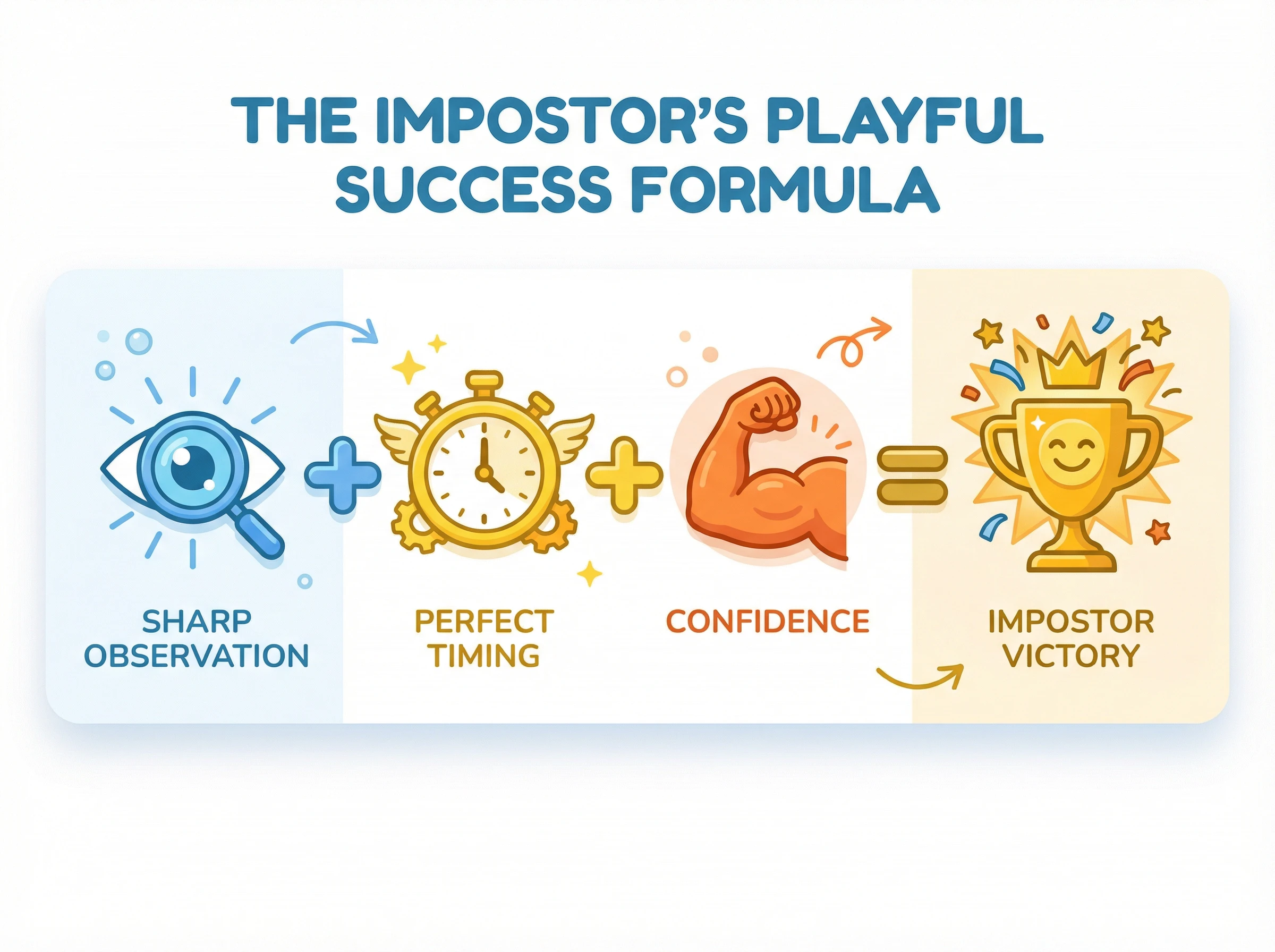
Figure 8: The winning formula - sharp observation + perfect timing + confidence = impostor victory.
After tracking 100+ games, here's what actually correlates with winning:
As Civilian:
- Listen carefully (40% impact)
- Ask good questions (30% impact)
- Track patterns (20% impact)
- Luck (10% impact)
As Impostor:
- Copy the vibe (50% impact)
- Deflect well (30% impact)
- Timing (15% impact)
- Luck (5% impact - impostors need less luck!)
As Mr. White:
- Vagueness (35% impact)
- Clue tracking (35% impact)
- Final guess accuracy (20% impact)
- Luck (10% impact)
Practice Scenarios
Want to get better? Try these practice rounds with friends:
Scenario 1: The Obvious Setup
Words: Dog / WolfGoal: Impostors try to survive 3 rounds
Scenario 2: The Tricky Pair
Words: Walking / RunningGoal: Civilians catch the impostor in 2 rounds
Scenario 3: Mr. White Challenge
Include Mr. White with words: Coffee / TeaGoal: Mr. White must guess correctly if caught
After each round, discuss:
- What descriptions gave people away?
- Which questions were most effective?
- Who played it perfectly?
Final Thoughts: It's Still Just a Game
Look, I've given you every competitive strategy I know. But here's the truth: Word Impostor is most fun when you're NOT trying too hard to win.
Some of my best memories are from games where we all screwed up, nobody knew what was happening, and we ended up laughing so hard we couldn't breathe.
Use these strategies to win when it matters (like when your competitive friend won't shut up about their winning streak). But also remember to relax and enjoy the chaos.
The best players know when to turn on try-hard mode and when to just vibe.
What are your favorite strategies? Drop a comment or share your best impostor survival story!
Want More Tips?
Check out:
- 100+ Best Word Combinations - The ultimate word list
- Funny Game Moments - When strategies fail hilariously
- Play Now - Practice these strategies
[社交分享按钮区域]
内部链接:
- 主游戏页面:4次
- 词库页面:2次
- 其他博客:3次
字数: 约2,200词阅读时间: 9-11分钟图片总数: 8张