
How to Play the Imposter Game: Simple Word Impostor Rules
When people talk about an imposter game, they usually mean a social deduction game where one player is secretly different from everyone else. The fun part is trying to spot who that player is before it's too late.
That core idea shows up in:
- Video games where one character is sabotaging the group.
- Imposter card games where one player holds a different card.
- Party games where someone doesn't know the topic everyone else is talking about.
On imposterwords, we use the same idea in a word imposter game:
- Most players share the same secret word.
- One player—the Impostor—has a different word or no word at all.
- Everyone describes their word, then votes to guess the impostor.
If you like the tension of "Who's lying?", this format is a clean, fast way to play.
What You Need Before You Start
You don't need cards, boards, or special equipment. To play the Word Impostor version of the imposter game, you only need:
- 3–10 players
- One device per player if you're playing online, or a single shared device for pass-and-play
- A browser that can open imposterwords.com
- A few minutes and a group willing to talk
You don't even have to come up with words for imposter game yourself. The site includes an imposter game generator with ready-made word packs.

Players, Devices, and Word Packs
- Players. The game works with as few as 3 people, but 4–8 is ideal. With more players, the discussion gets louder and less predictable.
- Devices. For offline play, you can pass a single phone around. For online play, give each person their own device and let the site handle secret words.
- Word packs. Pick a pack that matches your group (family-friendly, internet culture, etc.). The generator will serve up relevant imposter game words so you can start quickly.
Step-by-Step – How to Play the Imposter Game (Word Version)
This is the "how to play imposter game" section you can skim right before game night.
Step 1 – Set Up Your Game
- Open imposterwords.com.
- Choose your player count (3–10).
- Select a word pack. For beginners, pick something simple like "Everyday Life" or "Food & Drinks."
- Start a new round.
The imposter game generator now assigns:
- Regular players who will all see the same word.
- One Impostor who will see a different word or no word, depending on the mode.
Each player looks at their screen and memorizes their word.
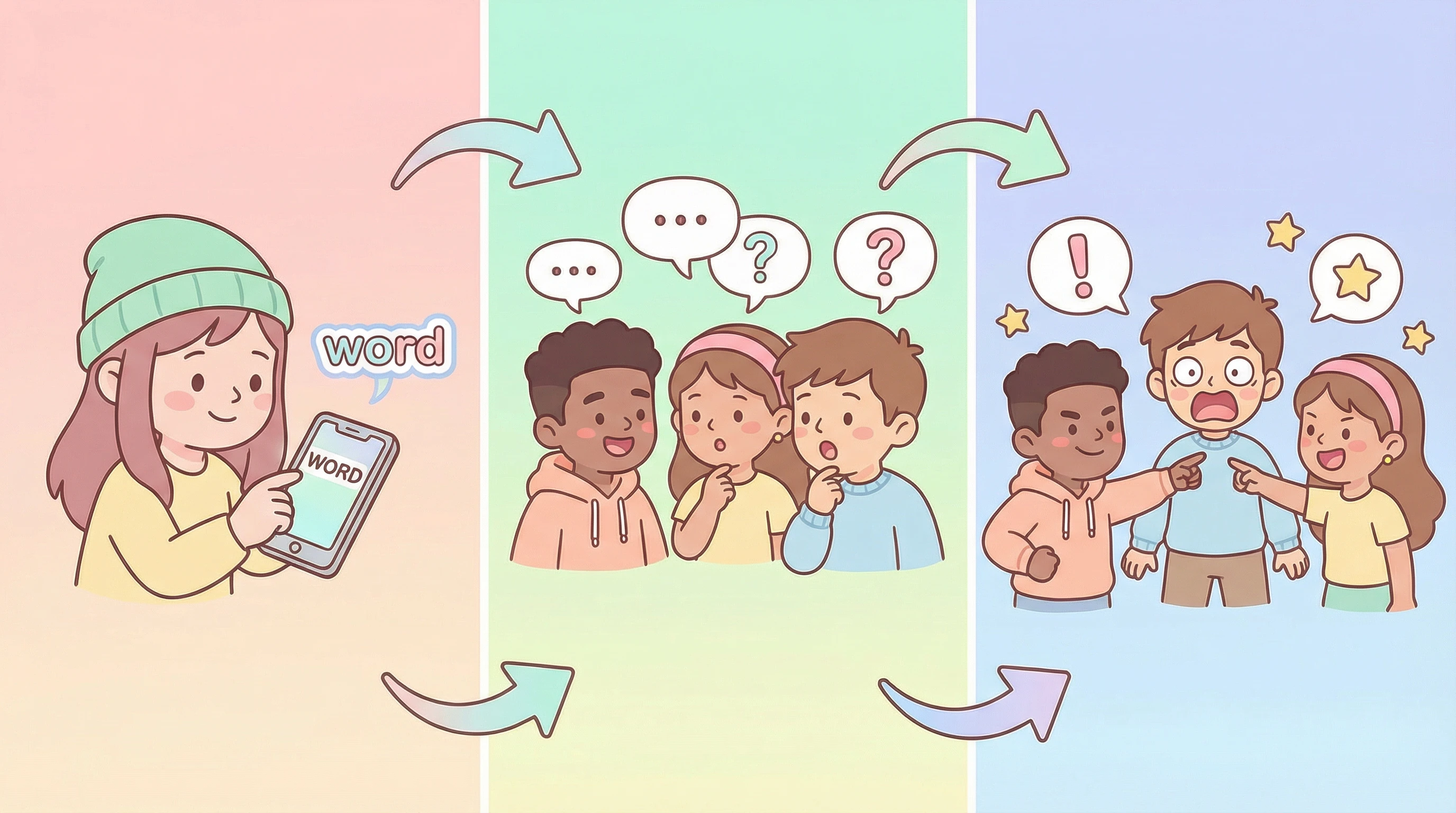
Step 2 – Describe and Discuss
- First round of clues.In turn, each player gives a short description of their word. They cannot say the word itself. The goal is to sound like you know the real word without making it too obvious.
- Listen carefully.As players talk, pay attention to tiny differences in how they describe things. In any guess the impostor game, small inconsistencies are the main clues.
- Questions and follow-up.Once everyone has spoken, you can start asking questions. Examples:
- "Would you see this at home or outside?"
- "Is this more about work or free time?"
- "Is it something you can eat, or just use?"
Step 3 – Vote and Reveal
After at least one full round of clues:
- Discuss suspicions.Talk out loud about who seems most suspicious and why. Maybe one player sounded too vague, or their clue doesn't quite match what others said.
- Vote.Count down from three and have everyone point, say, or tap who they think is the impostor. You can use the website's voting tools if available or handle voting manually.
- Reveal.The chosen player reveals their word. If they were the impostor—congratulations, the group wins. If they were a regular player, the impostor wins this round by staying hidden.
Play as many rounds as you like, rotating who becomes the impostor so everyone gets a turn.
Example Rounds to See the Rules in Action
Sometimes the easiest way to learn the imposter game is to walk through a full example.
Example 1: Easy round (coffee vs tea)
- Regular players' word: coffee
- Impostor's word: tea
Clues might sound like:
- Player A: "You usually drink this in the morning."
- Player B: "You can get it at a café."
- Player C (Impostor): "It's a hot drink that comes in different flavors."
All of these are true, but if most players are thinking about coffee, they might notice that Player C talked about "different flavors" instead of "caffeine" or "waking up." That small shift can reveal the impostor.

Example 2: Trickier round (YouTube vs TikTok)
- Regular players' word: YouTube
- Impostor's word: TikTok
Clues might be:
- "You can watch long videos here."
- "Many people follow channels on this platform."
- "This app is popular for short clips on your phone."
Now the group has to think carefully about which clues fit one platform and not the other.
Common Mistakes New Groups Make
- Clues are too obvious.Saying "You drink this at Starbucks" probably gives away "coffee" immediately and makes it easy for the impostor to blend in.
- Questions are too vague.Asking "Do you like it?" doesn't really help. Ask "Where would you use this?" or "How often do you see it?"
- People forget previous answers.Encourage players to listen, not just wait for their turn. A good find the imposter strategy is to catch contradictions.
You can even agree on a few simple house rules before you start (time limits, number of rounds, whether players can repeat words used in earlier rounds).

FAQ – How to Play the Imposter Game Online
Can I play this imposter game online with remote friends?Yes. Everyone opens imposterwords.com, joins the same room, and gets their word on their own device. You can talk over Zoom, Discord, or any call.
How many players do I need?The sweet spot is 4–8 players, but the game is playable with 3 and still fun up to 10.
Do I have to create my own imposter game words?No. The imposter game generator includes built-in word packs and can suggest new pairs so you never run out of ideas.